
Windshield damage is among the most common vehicle-related issues reported in dense urban traffic, with studies from organizations such as the AAA Foundation for Traffic Safety noting that constant road debris, stop-and-go driving, and close vehicle spacing increase the likelihood of chips and cracks forming on glass surfaces.
These conditions have pushed many drivers toward mobile solutions that reduce downtime and eliminate the need to visit a workshop. In cities with heavy traffic congestion, services like mobile auto glass replacement San Antonio are often referenced as part of broader mobile repair models that bring technicians directly to homes, offices, or roadside locations, allowing drivers to address windshield issues without disrupting daily schedules.
Despite this convenience, expectations must remain realistic. Mobile windshield service follows a structured process that prioritizes safety, environmental conditions, and proper installation standards rather than speed alone.
The challenge of windshield damage in urban environments
Urban driving creates a unique set of risks for windshields. Loose gravel, construction zones, and high vehicle density contribute to frequent glass impacts. Research highlighted by the Insurance Institute for Highway Safety (IIHS) indicates that even minor chips can expand rapidly due to vibration, temperature changes, and structural stress from city driving conditions.
Time constraints also play a major role. Many drivers delay repairs due to work schedules or traffic congestion, which often results in small damage becoming full cracks. These challenges underscore why mobile glass services have become a practical response to urban mobility needs.
Step-by-step: how mobile windshield service is typically completed
1. Scheduling and initial information
The process usually begins with a booking request through phone or online systems. Drivers provide details such as vehicle type, damage size, and location. This initial information helps determine whether a mobile technician can complete the job safely on-site or if a workshop visit is required.
2. Remote assessment and confirmation
Before arrival, technicians or support teams evaluate whether the damage qualifies for repair or full replacement. Small chips may be suitable for resin injection, while long cracks often require full windshield replacement. Environmental conditions such as rain, heat, or dust exposure are also considered.
3. Technician arrival and site preparation
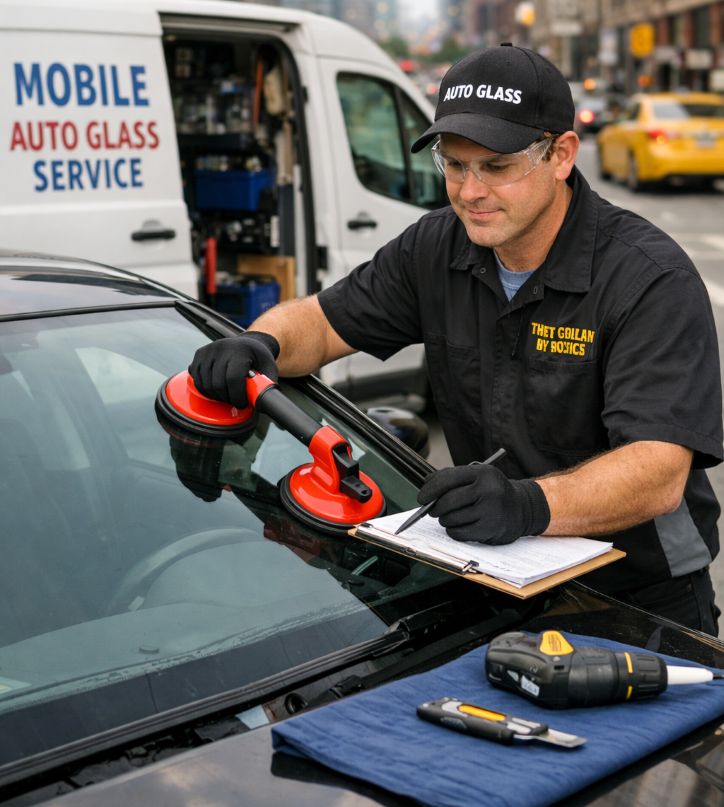
Once scheduled, a mobile auto glass technician arrives with tools, adhesives, and replacement glass if needed. The vehicle is positioned in a stable, shaded, or controlled environment to ensure proper installation. Safety around traffic or tight parking areas is also assessed before work begins.
4. Removal and installation process
If replacement is required, the damaged windshield is carefully removed. The frame is cleaned and prepared to ensure proper bonding. New automotive glass, typically manufactured to meet Federal Motor Vehicle Safety Standards (FMVSS), is installed using high-strength urethane adhesive designed to secure the windshield structurally.
5. Curing and safety inspection
After installation, the adhesive requires curing time. During this phase, the vehicle should remain stationary. Technicians then conduct alignment and sealing checks to ensure the windshield is properly fitted, watertight, and structurally secure.
Safety standards and material expectations
Windshield replacement is not only a cosmetic repair but also a structural safety procedure. The Auto Glass Safety Council (AGSC) emphasizes that proper installation contributes to roof support during rollovers and ensures correct airbag deployment in frontal collisions.
Technicians must use certified adhesives, OEM or equivalent glass, and follow controlled installation methods. Even in mobile settings, these standards remain the same as those in fixed workshops. The difference lies in location, not in quality requirements.
When mobile service is appropriate and when it is not
Mobile windshield repair is suitable for many common scenarios, especially small chips, minor edge cracks, and full replacements in accessible locations such as residential driveways or office parking lots. However, not every situation is ideal for on-site service.
Workshop service is often required when damage is severe, such as deep structural cracks affecting visibility or cases where the vehicle’s positioning is unsafe for technicians. Complex sensor recalibration in advanced driver-assistance systems (ADAS) may also require specialized indoor equipment.
Environmental conditions play a key role as well. Strong winds, heavy rain, or extreme heat can affect adhesive curing and compromise installation quality.
Key factors drivers should consider before requesting mobile service
Choosing between mobile and workshop-based windshield repair involves more than convenience. Drivers should evaluate the severity of the damage, accessibility of the vehicle, and weather conditions. Vehicle technology is also increasingly important, especially for newer models equipped with camera-based safety systems that require recalibration after glass replacement.
For many motorists, understanding broader maintenance habits is equally important, as highlighted in discussions on basic car safety and upkeep for drivers, which emphasizes how routine awareness of vehicle condition can help prevent avoidable safety risks.
Cost and insurance coverage may also influence the decision, as some providers coordinate directly with insurers for claims processing. In urban environments, where time efficiency matters, mobile auto glass services offer a practical solution, but only when conditions allow for safe and compliant installation.
Cost and insurance coverage may also influence the decision, as some providers coordinate directly with insurers for claims processing. In urban environments, where time efficiency matters, mobile auto glass services offer a practical solution, but only when conditions allow for safe and compliant installation.
Ultimately, the decision should balance convenience with technical requirements. A properly installed windshield supports vehicle integrity, passenger safety, and long-term durability, making the choice of service method a matter of both practicality and responsibility.
Conclusion
Mobile windshield service reflects how modern automotive care adapts to urban living, where time constraints and traffic conditions shape everyday decisions. While services such as mobile windshield replacement bring flexibility, they still rely on strict safety protocols, material standards, and environmental suitability.
Drivers benefit most when they understand when on-site service is appropriate and when a controlled workshop environment is necessary. By considering damage severity, vehicle systems, and external conditions, they can make informed decisions that prioritize safety without sacrificing convenience.
In fast-paced city driving environments, that balance becomes essential to maintaining both mobility and road safety.
