
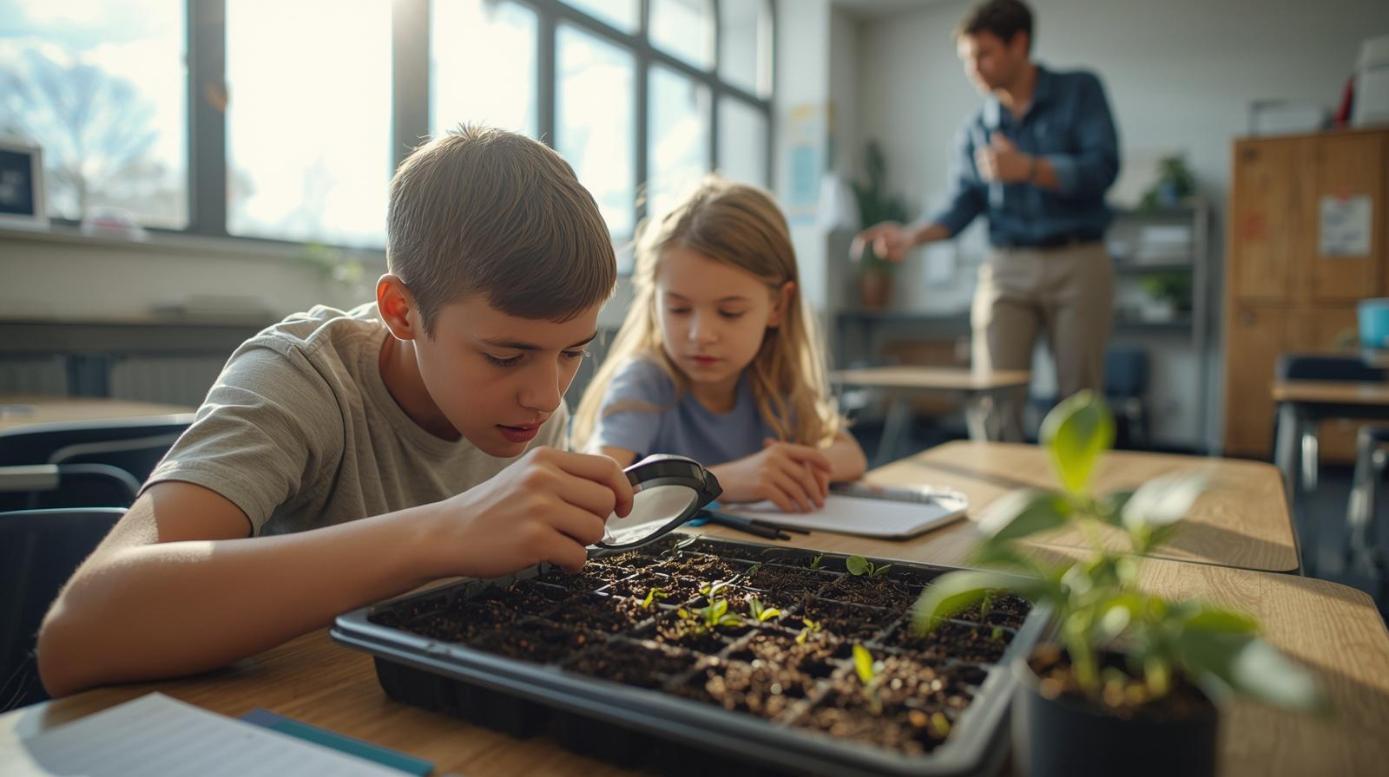
A fifth-grade classroom on the outskirts of a quiet community received an unusual visitor one afternoon. It wasn’t a scientist wearing a lab coat. Instead, it was a technician from a local company who spends his weekdays inspecting basements, lawns, and crawl spaces.
He demonstrated to the class the organization of ant colonies and elucidated the reasons behind certain bugs’ attraction to damp areas. What started as a simple visit quickly woke up the room.
Suddenly, students accustomed to memorizing facts witnessed science unfolding right before their eyes.
When a school pest management program begins, one of the first partnerships schools often build is with local pest control companies. These professionals sometimes visit classrooms or school gardens to talk about the living systems just outside the school walls.
They bring years of hands-on experience dealing with insects and small animals, along with practical knowledge about ecosystems, habitats, and how even small environmental changes can affect the surrounding area.
One student raised a hand and asked, “Are bugs all bad?”
The technician smiled and shook his head. “Actually, most bugs are beneficial,” he said. “It’s just the bad ones we tend to notice.”
What seemed like a routine workday for the technician turned into a memorable lesson in biology.
Discussions About The Environment
Environmental science can feel abstract until students encounter something they can actually observe. Ants gathering around a lunch table. Mosquitoes hovering near a drainage ditch. Even an older building might occasionally host a mouse.
Teachers say moments like these help students connect classroom lessons to real ecosystems. One educator shared that after a technician’s visit, her students began drawing maps of insect activity in the school garden.
They marked where spiders built webs, where ants formed trails, and where pollinators gathered around flowers.
Suddenly, science had a location. The schoolyard.
These lessons also show how environmental balance works. When compost is handled properly, food waste stops attracting pests and new insect populations appear. When water collects, even in small puddles, mosquitoes can breed.
Students quickly learn that tiny environmental changes can lead to big results.
Curiosity Begins With Observation
At its core, science begins with curiosity. Questions naturally follow observation.
Why are there more ants after rain? Why do some insects stay under rocks?
For pest control professionals, these questions come from everyday experience rather than theory alone.
During one presentation to middle school students, a technician explained it simply:
“Nature is like a puzzle. Once you figure out what attracts something, you can change the environment instead of constantly fighting it.”
Students begin to see pest prevention as a form of environmental study. Instead of relying only on chemicals, they realize many solutions involve adjusting habitats. Cleaning spaces, sealing entry points, and managing waste can all reduce pest problems.
For some students, these experiences spark new interests. A few start asking about careers in biology, wildlife management, or environmental science. Not every lesson points toward a career, but some definitely plant the seed.
Ideas For A Greener School
One classroom visit ended with a conversation about everyday habits. Students and teachers discussed how they could make their learning spaces healthier for both people and wildlife.
The conversation slowly turned into a list of practical ideas, almost like an informal guide for a greener classroom. Students suggested sealing snacks, recycling properly, and maintaining school gardens while protecting beneficial insects.
None of these suggestions seemed revolutionary on their own. But together they revealed something deeper than textbook science.
Environmental understanding grows through daily choices. Lessons can come in many forms. In this case, they arrived wearing work boots instead of lab coats.
